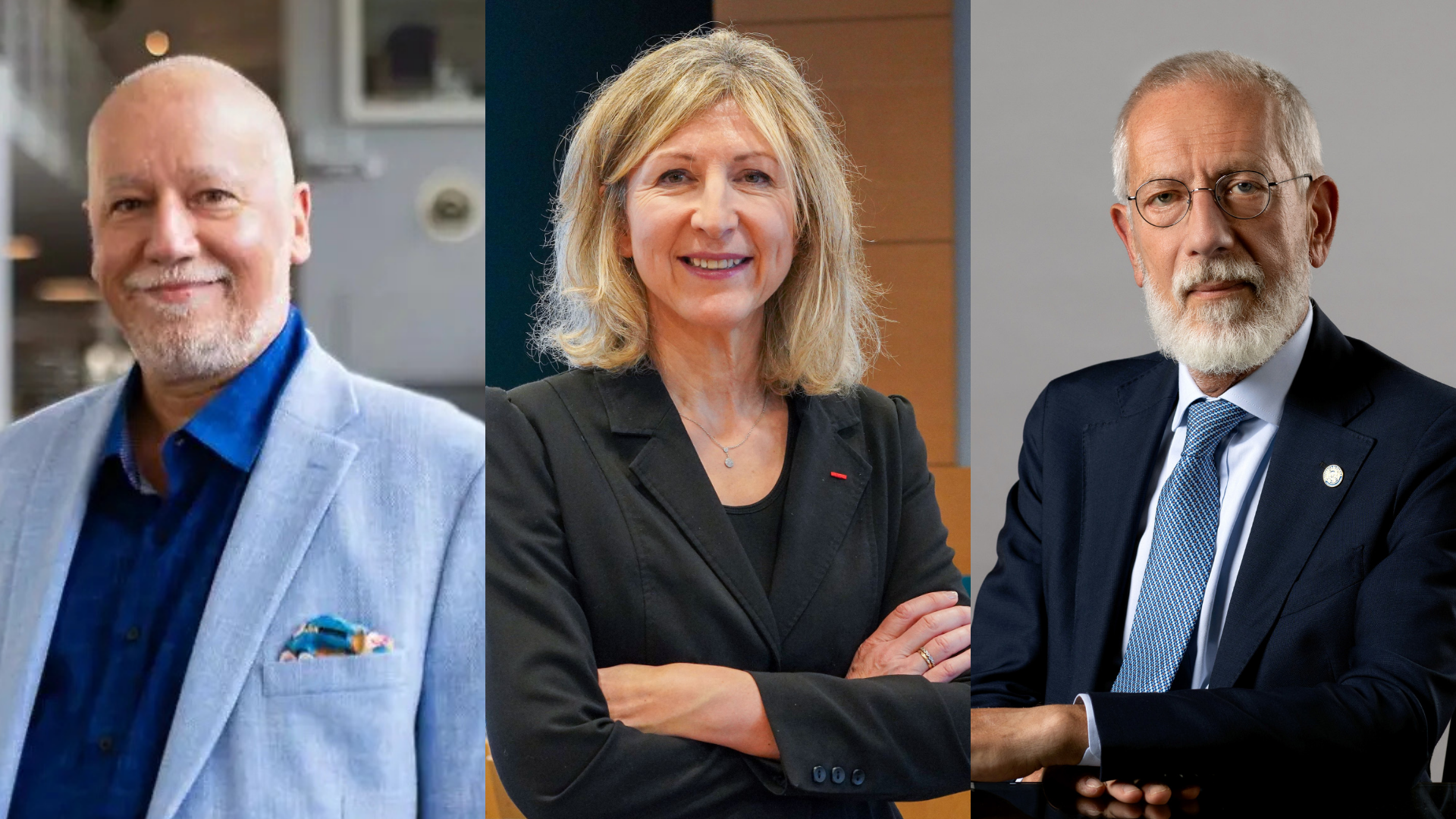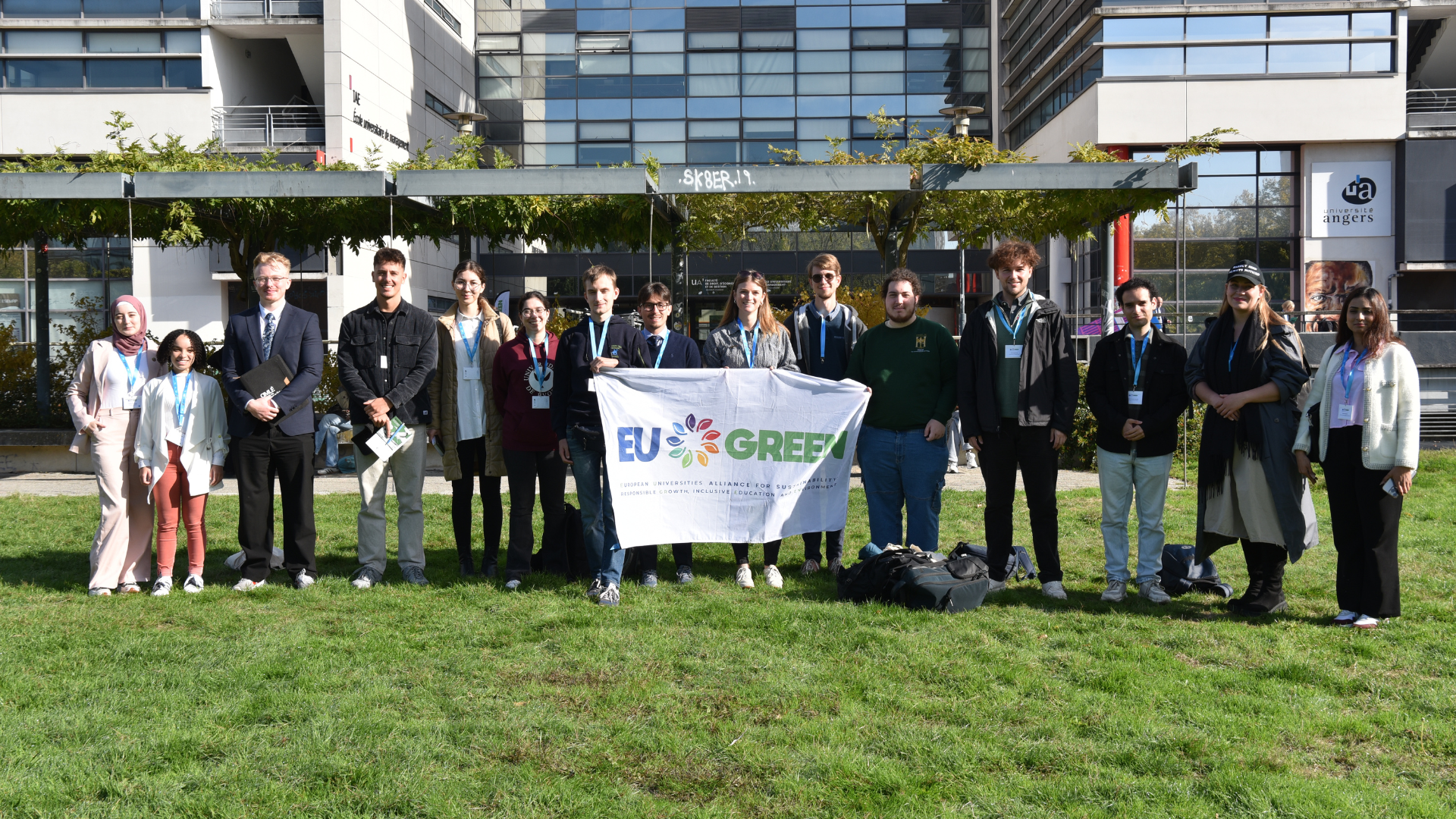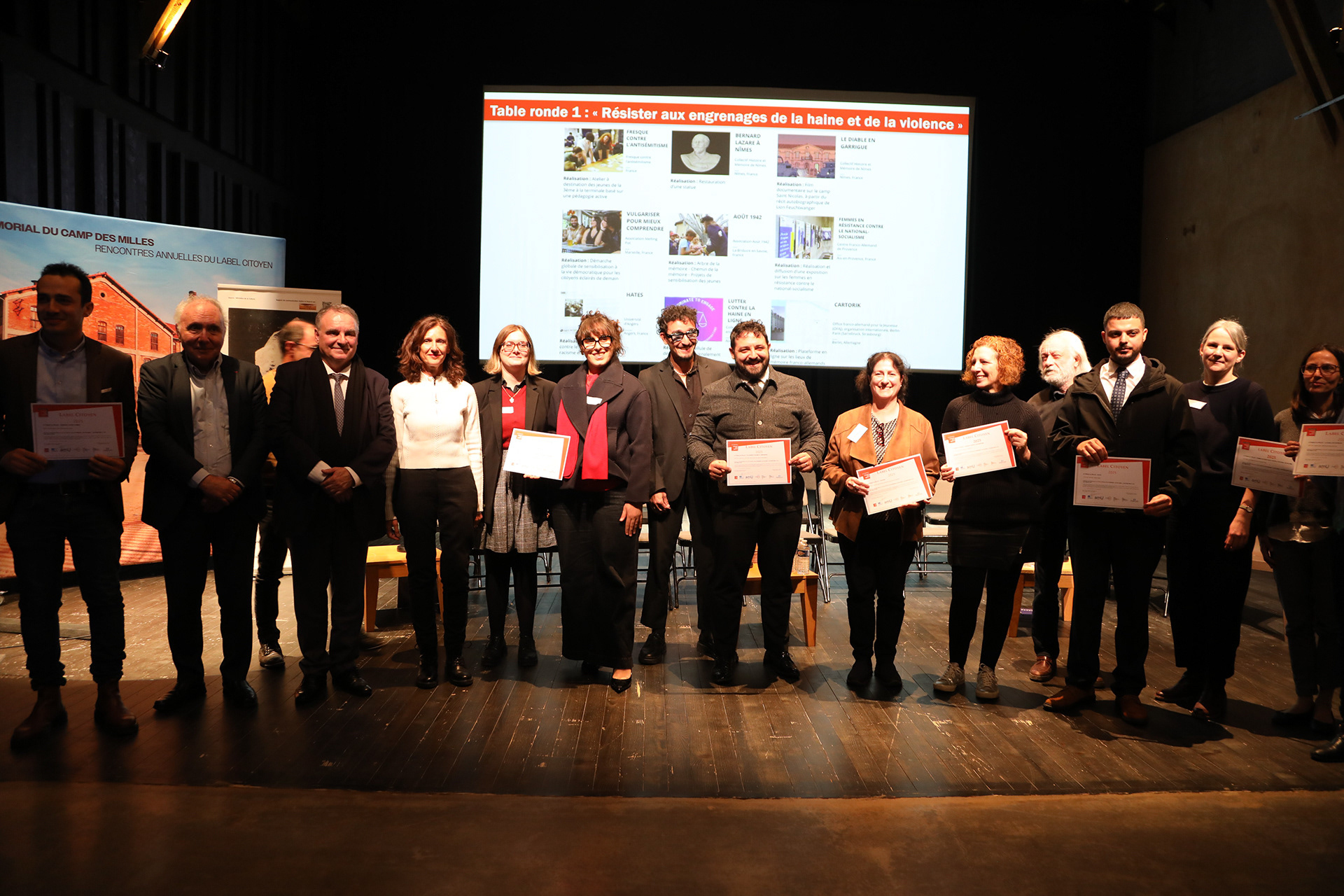

As part of the EU GREEN Alliance, the rectors of the Universities of Parma, Angers and Gävle share their perspectives on regional engagement, sustainability and the future of European higher education. In these interviews, Paolo Martelli, Françoise Grolleau and Anders Kottorp reflect on their universities’ identities, their roles in the alliance and their visions for how EU GREEN can help shape a more inclusive, sustainable and forward-looking Europe.
🇮🇹 University of Parma – rector Paolo Martelli
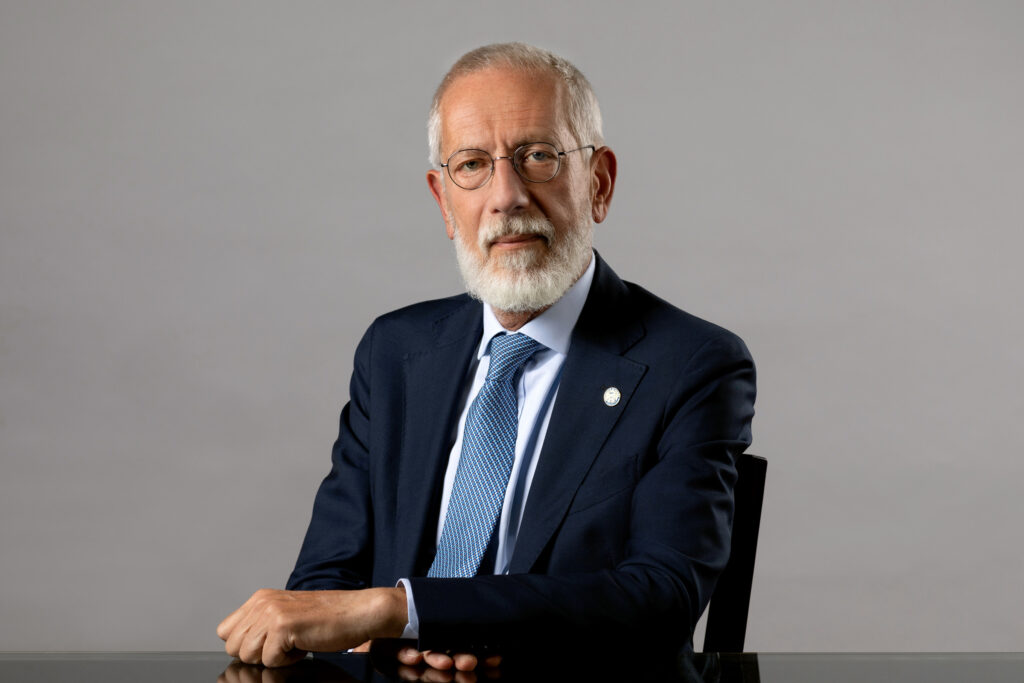
My name is Paolo Martelli, and I have the privilege of serving as the Rector of the University of Parma. I am a Full Professor of Veterinary Clinical Medicine, and my academic career has been closely tied to the advancement of veterinary sciences, animal health and welfare. Over the years I have held various leadership roles within the University, including serving as Head of Department and subsequently as Vice-Rector, experiences that have shaped my commitment to strengthening our institution’s academic excellence and societal impact. It is an honour to guide one of Europe’s oldest universities into a new era of innovation, sustainability, and international cooperation.
What are its main geographical and economic features? What disciplines does it cover? Which study programmes are most popular or provide the best career prospects locally?
Parma is nestled in the Emilia-Romagna region, characterized by its fertile plains, continental climate, and strategic location between northern and central Italy. The region boasts a robust economy (the Gross Domestic Product (GDP) per capita is above the EU-27 average) driven by the agri-food industry, advanced manufacturing, pharmaceuticals, automotive and cultural tourism. Parma enjoys international recognition as a capital of gastronomy, also offering a high quality of life (tenth in the 2025 national ranking).
The University of Parma mirrors this richness and diversity. Beyond our approximately 30,000 students, 1,800 staff and faculty members, and multiple campus areas spread across the city, our identity is shaped by a strong sense of community, openness, and commitment to public service. We are a comprehensive university, spanning fields such as the humanities, social sciences, law, economics, medicine and surgery, engineering, architecture, pharmacy, food and environmental sciences, and veterinary medicine.
Our programmes are deeply connected to our Region, many have a close synergy with Parma’s world-renowned food sector. All our programmes offer excellent employability and strong collaborations with local and international companies.
What is your perspective on this initiative? How is your university participating in the EU GREEN Alliance?
I consider the European Universities initiative one of the most transformative projects ever promoted by the European Union. It provides universities with the opportunity to work together in an unprecedentedly integrated way, enabling the creation of a truly European higher education area.
The University of Parma is a proud and convinced member of the EU GREEN Alliance. We participate actively in several work packages, and we are leaders of mobility and internationalization. Through this alliance, we are fostering new cross-border learning opportunities, helping to redesign curricula to reflect green and digital transitions, and supporting joint research initiatives that address societal challenges.
Do you believe this initiative can foster not only inter-university collaboration but also strengthen ties between our regions and municipalities?
Absolutely. The value of this initiative extends well beyond academic cooperation. By bringing universities together with their respective regions, industries, and municipalities, the alliance creates a powerful network that strengthens interregional cohesion and shared development strategies.
In Parma, our participation in EU GREEN enhances the dialogue between the Universities, local authorities, cultural institutions, and economic stakeholders. This collaboration allows us to share expertise with partner regions across Europe that face similar challenges in areas such as environmental sustainability, food production, health, and technological innovation. These connections foster long-term partnerships that benefit territories as much as universities.
In many global university systems, research is increasingly tied to social engagement and knowledge transfer. Is this true for your institution as well?
The third mission — knowledge transfer, public engagement, and societal contribution — is indeed at the heart of our institutional strategy. Research at the University of Parma is strongly oriented towards real-world impact. Our researchers work closely with industry, local institutions, and international partners.
We promote technology transfer through spin-offs, patents, and collaborative laboratories, while also investing in public engagement initiatives that bring science closer to society. This approach ensures that our research not only advances academic knowledge but also contributes to the well-being, the sustainable development of our community and the progress of the society.
Future European citizens: In your view, how is the EU GREEN project helping to shape the citizens of tomorrow?
The EU GREEN project plays a vital role in shaping the citizens of tomorrow. By offering students access to a multicultural, multilingual, and interdisciplinary environment, it encourages them to embrace a European identity built on cooperation, sustainability, and inclusion.
Our students learn to approach global challenges—such as climate change, digital transformation, and social inequality—with a critical and responsible mindset. Through mobility opportunities, joint courses, and shared research experiences, they develop the competencies required to become engaged, resilient, and forward-looking European citizens. In this sense, EU GREEN is not only an academic endeavor but a catalyst for building the future of Europe.
🇫🇷 University of Angers – Rector Françoise Grolleau
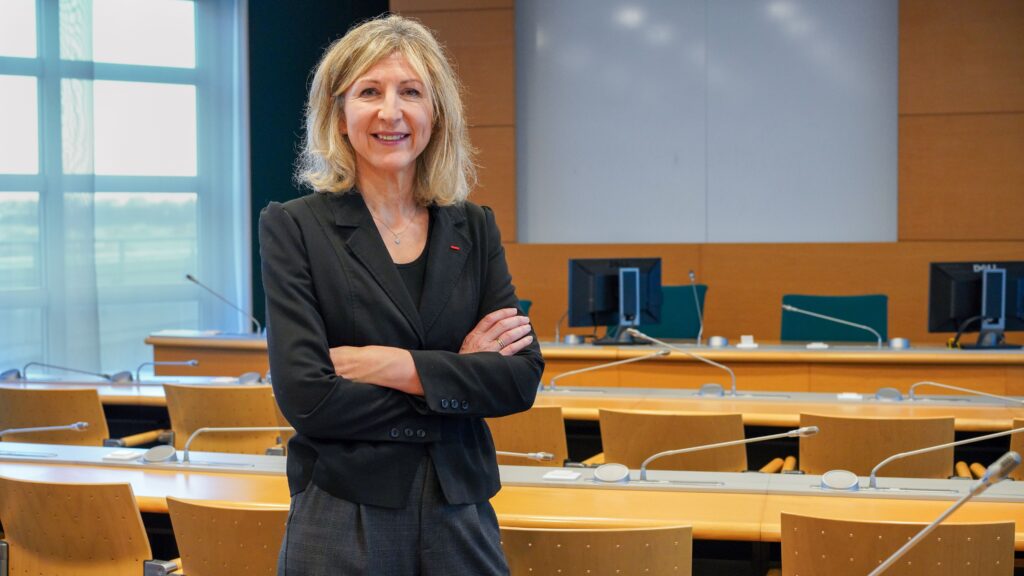
Françoise Grolleau is a professor of neuroscience who earned her PhD in 1996. She joined the University of Angers in 1997 following a postdoctoral fellowship at the University of Cambridge (UK). In 2006, she established the first Europe Unit in the Pays de la Loire region, and in 2011, she founded the Europe & Research Department within the consortium of the Universities of Le Mans, Nantes, and Angers.
In 2015, she was awarded the title of Chevalier de la Légion d’Honneur. From 2016 to 2019 she served as Vice-Rector for European and International Affairs at the University of Bretagne Loire (UBL) then at the University of Angers until 2022, and was First Vice-Rector in 2022/2023. On February 22nd, 2024, she was elected as Rector of the University of Angers for a four-year term.
What are its main geographical and economic characteristics? what fields of study does it offer? Which study programs are the most attractive, and which provide the best job opportunities in the region?
At the heart of a region known for its quality of life, the University of Angers (UA), the 3rd biggest employer in the region, offers an environment in which its staff and students can flourish. It is a vibrant and young city with nearly 40,000 students and it offers numerous activities contributing to the well-being of students. Its 160,000 inhabitants make it the 18th largest city in France. As well as being a dynamic city, Angers is also the greenest city in France with lots of green spaces, a clear commitment to sustainable development and a dense economic activity.
The UA is known and recognized for its excellence in research, its ability to support students towards success, and master and professional degree students towards employment. The UA community involves 26,295 students, 2,084 staff and supports social, inclusive and environmental policies.
The UA has 8 faculties (faculty of Law and Economy; Humanities; Science; Health; 1 Technological Institute;1 Engineering school; 1 Management school; 1 Tourism institute) and 31 federative research units and structures on 6 campuses in Angers and Western France. It offers 310 courses/programmes in key disciplines. It started very early on creating quite original career-oriented courses.
For several years now, it has had the highest pass rate in France for 3-year bachelor’s degree courses. In 2022-2023, the success rate reached 87,5% for 3-year students and 90,9% for 5-year students. It is well established in the local region and works in close partnership with its socio-economic partners. With over 380 international partners, the University of Angers definitely has an international dimension.
As an example, tourism studies, through the Esthua institute, stand out for both their scale and quality, and align with the economic identity of the Loire Valley as a major cultural and touristic destination. Within 30 months after obtaining their diploma, 88,4% of graduated students find a job.
What do you think about the European Universities initiative? How has your university integrated into the EU GREEN network, and which aspects of the project are you involved in?
The European Universities initiative is a great opportunity to foster collaboration between European universities. Our alliance brings together peripherical regions, who face the same rural and economic issues. Together, we are creating a European educational and research university where sustainability is embedded across disciplines. By working together, we amplify impact, promote European values, and ensure that all regions—especially peripheral regions—thrive in an inclusive and resilient Europe.
EU GREEN is not a side project, it is now embedded in the DNA of our institution. It informs our academic vision, our research strategy, and our outreach to students and staff.
The University of Angers joined the consortium during its development phase and quickly positioned itself as a committed and proactive partner. UA initiated the in-person signature of the Memorandum of Understanding during its Campus Day in September 2021, marking a key moment in the birth of the alliance.
The UA is leading the Research work package, which involves over 400 researchers from across the alliance. This work package aims to build a long-lasting and structured research network through six interdisciplinary clusters focused on key sustainability challenges. The Research work package promotes collaboration between researchers and encourages them to develop joint projects, encourages mobility within the alliance, and provides targeted support to access European research funding. It also supports early-stage researchers and fosters synergies with other work packages, particularly in education and innovation and mobility.
By coordinating WP3, the University of Angers plays a key role in shaping the alliance’s scientific strategy and in positioning EU GREEN as a driver of impactful, interdisciplinary research across Europe.
Do you believe this initiative can foster meaningful connections not only between universities but also between their surrounding regions?
Indeed, in the EU GREEN alliance, we have over 80 associate partners, most of which are regional and local partners. We have created a work package on the engagement of our partners towards sustainability. The aim of this work package is to design and implement an EU GREEN strategy for social engagement that is in line with the United Nations Sustainable Development Goals (SDG). Through this strategy, EU GREEN partners will design and run challenge-based events with industry and society to find common innovative solutions and unique sustainability challenges in order to disseminate sustainability best practice to local stakeholders.
As an example, on the 7th of October, Angers will organize a Conference of Parties, which goal is to encourage collaboration between our municipalities and regions, and our universities. Together, we aim to build a common strategy on sustainable engagement in order to reach a sustainable territory, starting with our campuses as living labs.
In many international university systems, research is now closely linked to the “third mission”. Is this also the case at your university?
Indeed, we have identified 6 areas of Research clusters: health and well-being; agriculture, food, and environmental sustainability; engineering and technology for sustainable development; sustainable tourism for cultural and natural heritage; education sciences for sustainable development; challenges in ecosystem biodiversity.
These themes are a common fertile ground for all the EU GREEN missions and values. Indeed, they are closely related to major societal challenges and are linked to the UN SDG. In our alliance, it is our aim to link Research with our innovation partners and to encourage the knowledge transfer.
Beyond identifying research priorities linked to societal challenges, we actively promote collaboration with local communities and stakeholders. From public science events to partnerships with municipalities and companies, we aim to make research a shared effort and a transformative force for our territories.
In your opinion, how is the EU GREEN project playing a crucial role in shaping the future European citizens?
EU GREEN plays a crucial role by fostering a shared European vision that is based on sustainability, inclusion, and cooperation. It supports the transformation of our institutions and creates opportunities for students, researchers, and staff to engage across borders, disciplines, and cultures.
By encouraging mobility, joint research, and community involvement, EU GREEN helps build a sense of belonging and responsibility toward both local and global challenges. It empowers our academic communities to contribute actively to a more sustainable and united Europe—through education, research, and civic engagement.
🇸🇪 University of Gävle — Rector Anders Kottorp
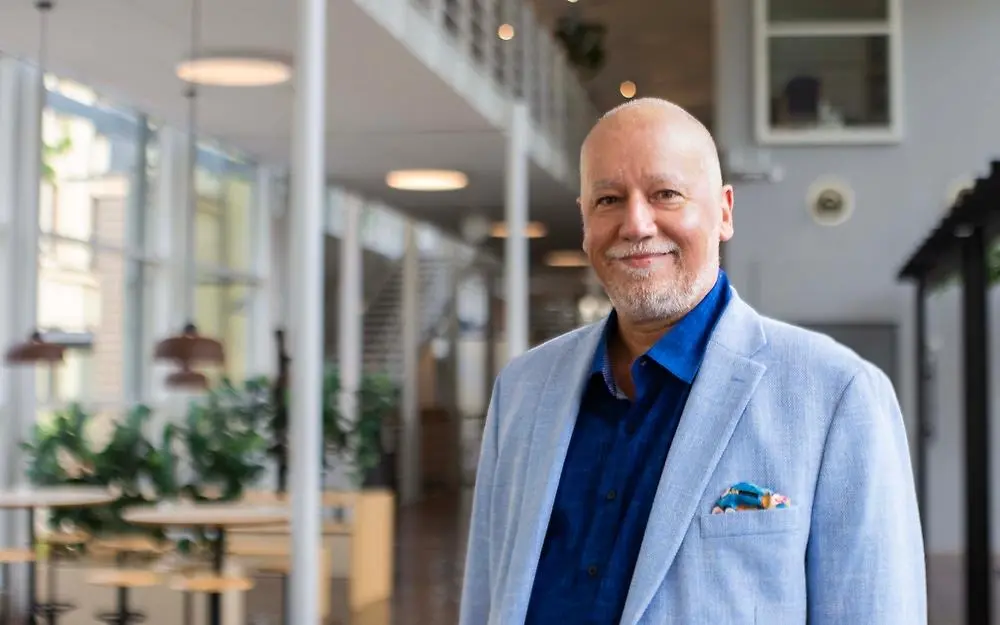
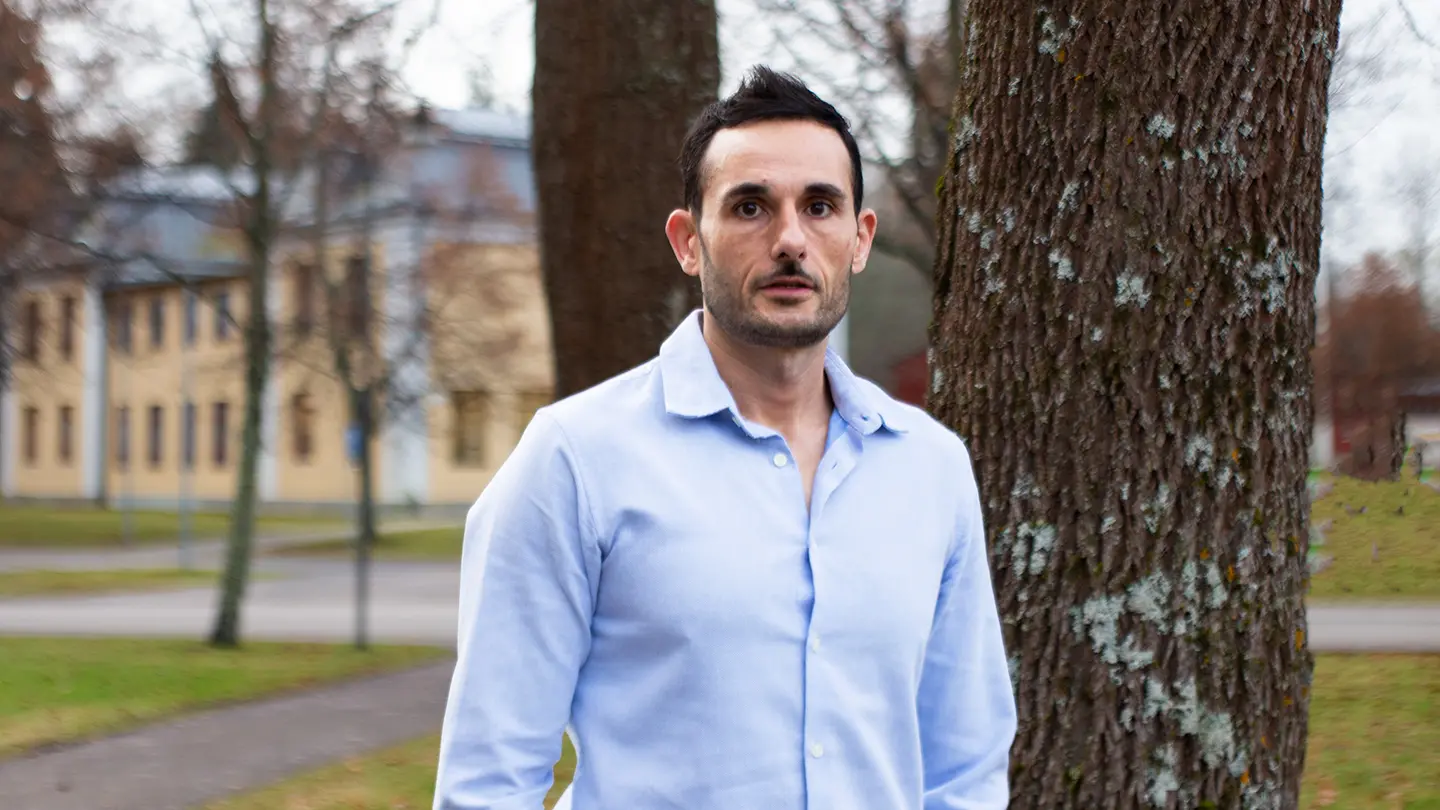
My name is Anders Kottorp, Rector of the University of Gävle since October 2025. Returning to my hometown after more than forty years, I bring academic and leadership experience from several Swedish and international universities. I am a Professor of Occupational Therapy with a PhD from Umeå University, and my career includes leadership roles at Karolinska Institutet, a tenured professor position in Chicago and a deanship at Malmö University during its transition to full university status. I am committed to accessible leadership and to strengthening our university’s role regionally and internationally in both education and research.
I am a professor of Occupational Therapy and has conducted research in health sciences for many years. I earned my doctorate at Umeå University in northern Sweden in 2003. Between 2006 and 2015, I held several managerial roles at Karolinska Institutet in Stockholm, and from 2014 to 2017 I was Professor at the University of Illinois in Chicago.
In recent years, I have served as Dean of the Faculty of Health and Society at Malmö University, during the period when Malmö University College transitioned into a university. The experience of building research and doctoral education, often under pressure and with strategic priorities, is something I brings with me to Gävle.
Since taking office as rector in Gävle, I am proud to lead a university where sustainability, accessibility and societal relevance are at the heart of everything we do. Together with our faculty, staff and students, I strive to create opportunities for learning, collaboration and growth — both locally and globally.
Your city/region and your university
Gävle, my university’s home, is located on the east coast of Sweden — a one and a half hour train ride north of Stockholm. The city has a rich industrial heritage but is now equally known for its vibrant cultural scene, modern industries, and deep commitment to sustainability. Surrounded by nature and close to the Baltic Sea, Gävle offers a high quality of life and a strong sense of community.
University of Gävle plays an essential role in the region’s development. With 19,000 students, we are a popular higher education institution in Sweden. Our university is deeply committed to addressing societal challenges through interdisciplinary education and research. Sustainability, inclusion, and lifelong learning are key pillars of our mission.
We offer a broad range of programmes in fields such as education, engineering, social sciences, health and business. Popular choices among our students include teacher education, engineering (with innovative new programmes in smart systems, sustainable construction and digitalization), criminology, and business administration — all aligned with regional and national needs for skilled professionals.
We are proud to be part of the EU GREEN Alliance, collaborating across Europe to promote knowledge, innovation and social responsibility.
European Universities initiative: What is your perspective on this initiative? How is your university participating in the EU GREEN Alliance?
This initiative gives us the opportunity to bring Europe together and build strong university alliances that, with joint forces, can tackle urgent societal challenges. Sustainability issues have been top priority at University of Gävle for many years so our full commitment in EU GREEN came naturally. We are proud to be leading the work package aiming to create a sustainable and healthy campus and to carry extra responsibility for the work related to access, diversity and inclusion.
Connecting regions through academia:
We truly hope and believe so. The Municipality of Gävle and the County of Gävleborg are associate partners of EU GREEN. Representatives in key positions in both authorities are also engaged in our local EU GREEN Steering Group so the level of interest and commitment is high.
Future European citizens:
EU GREEN has strong and brave ambitions at the same time as many of the efforts are made by nudging and changing little things at grassroots level. Step by step we are hoping that we will lead future generations to make wise and good decisions
Research and Collaboration at the University of Gävle
At University of Gävle, research, education, and collaboration are closely integrated. Through strategic research initiatives and extensive collaborative efforts, the University contributes to addressing societal challenges and promoting sustainable development, both locally and globally.
The University’s research is organized into four strategic areas: sustainable urban development, health-promoting work, innovative learning, and intelligent industry. Within sustainable urban development, researchers explore how environmentally friendly and inclusive urban environments can be created through interdisciplinary collaboration. Health-promoting work develops knowledge on preventive measures and sustainable welfare systems. Innovative learning focuses on new pedagogical methods and digital solutions for lifelong learning, while research within intelligent industry aims to develop smart and sustainable industrial systems for future needs.
Collaboration with the surrounding society is an integral part of the University’s operations and encompasses a wide range of long-term partnerships and projects. The University has established strategic agreements with partners such as Region Gävleborg and Gävle Municipality, and continuously collaborates with actors from the business sector, public services, and civil society. Initiatives such as FramFör, which connects businesses, students, and researchers to highlight successful enterprises, and the Exploratory Learning Lab, which promotes technological interest and digital competence among young people and students, are clear examples of how the University links academia and society.
Through its Co-op programs, students have the opportunity to combine academic studies with employment during their education, strengthening both their employability and companies’ access to new competencies. Through Knowledge Transfer Partnerships (KTP), young academics lead development projects in small and medium-sized enterprises. The Arena for Social Knowledge Development (ASK) is another example of how the University collaborates with social services and other actors to develop knowledge and methods to address major social challenges.
The University’s research projects are designed to meet societal needs and are conducted in close collaboration with external partners. Examples include Cycle4Climate, which develops methods to promote cycling in urban environments through collaboration with cities and regional stakeholders, and Can-Work-S, which supports cancer survivors’ return to working life in cooperation with the healthcare and employment sectors.
The STRIM project strengthens small and medium-sized enterprises’ capacity for sustainable digital transformation through a multidisciplinary approach, while MoDiGo develops measurement and data processing solutions to support the green transition in industry. The Flexible Transition for Sustainable Innovation project supports companies in developing new working practices that enhance both innovation capacity and organizational attractiveness.
At the University of Gävle, there is a strong belief that knowledge should benefit society. Through strategic research initiatives, extensive collaboration, and projects that address real-world needs, the University actively contributes to shaping a sustainable, innovative, and inclusive society.
Future European citizens: In your view how is the EU GREEN project helping to shape the citizens of tomorrow?
It is my strong belief that the EU GREEN project, together the other European University Alliances, will help Europe’s future generations acquire future-proof skills and international understanding as well as contribute to the quality and competitiveness of European higher education.