
How can value be restored to land transformed by industry and mining? How can agricultural and urban soils be protected from degradation? And what can a visit to mining areas, a copper smelter or Europe’s largest tailings storage facility teach us about the impact of human activity on the environment? These were some of the questions explored by participants in the second edition of the Blended Intensive Programme “SOIL – Protection and Management of Degraded and Industrial Lands”, whose on-site component took place from 7 to 11 September at the Wrocław University of Environmental and Life Sciences.
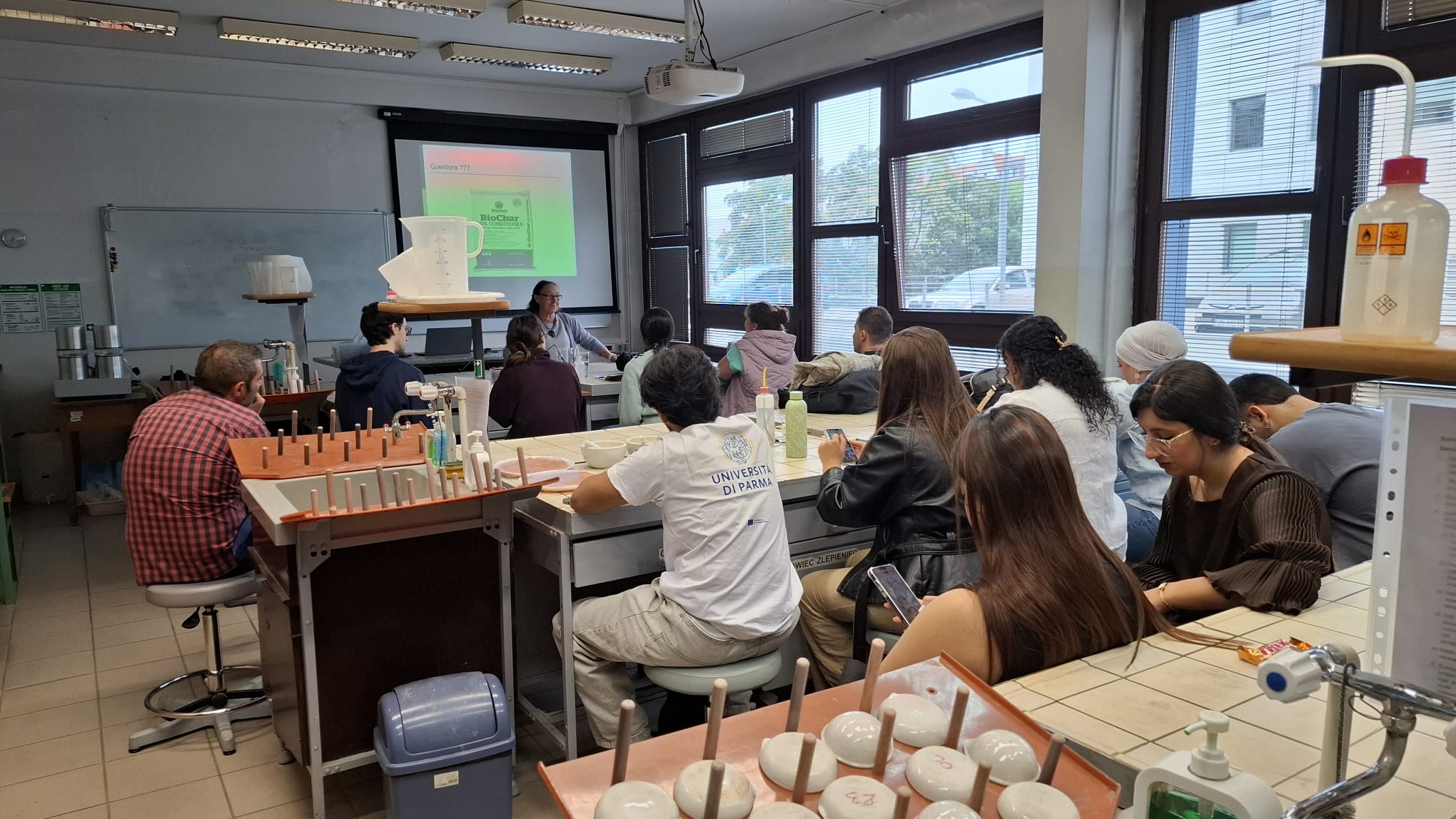
This year’s edition brought together 21 students from the University of Parma, University of Oradea, University of Angers, University of Évora and University of Gävle. The programme was prepared and coordinated by Prof. Anna Karczewska from UPWr, with the support of Prof. Katarzyna Szopka. It combines on-site activities with a virtual component running from 8 June to 9 October, while the September stay in Wrocław gave participants an opportunity to put their previously acquired knowledge into practice through laboratory classes, workshops and fieldwork.
From soil properties to land reclamation
The BIP covered both the fundamental functions of soil and the threats to its quality, as well as practical ways of preventing degradation. Students learned about the principles of soil protection, methods of improving the quality of agricultural and urban soils, and approaches to the remediation of contaminated soils and the reclamation of areas heavily transformed by human activity.
Particular attention was devoted to post-industrial and post-mining areas – environments where the effects of long-term resource extraction and industrial activity are especially visible, and where restoring environmental value requires expertise in soil science, environmental protection and the reclamation of degraded land.
Three days in the field
One of the key elements of the programme was three days of field classes and study visits. Participants visited the Żelazny Most tailings storage facility and the Legnica Copper Smelter. In Wałbrzych, they explored the challenges associated with spoil heaps left behind by coal mining, while in Złoty Stok they examined the environmental legacy of centuries of mining and smelting activity.
The visit to Złoty Stok included both the former Gold Mine and sites associated with the historical mining and smelting of arsenic ores. This allowed participants to see how different types of industrial activity affect soils and the environment, and how different sites require different approaches to remediation, protection and reclamation.
An international perspective on a shared challenge
Alongside academics from UPWr, professors from the University of Extremadura and the University of Oradea were also involved in delivering the programme. The international teaching team provided an opportunity to compare experiences from different countries and regions and to demonstrate that, although the causes of soil degradation may be local, the challenges associated with soil protection extend far beyond national borders.
BIP SOIL is one example of the educational cooperation developed within the EU GREEN alliance, combining student and staff mobility with a practical approach to shared environmental challenges.